
 November 13, 2025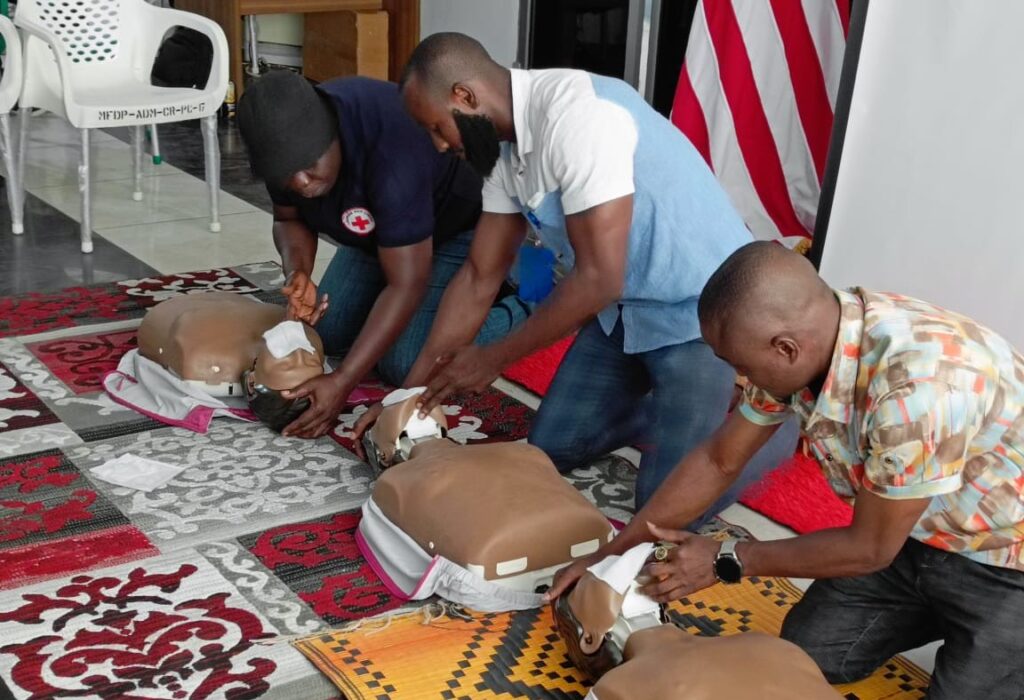
The Liberia National Red Cross Society (LNRCS) has commenced a comprehensive Workplace First Aid and Safety Training for 600 employees of the Ministry of Finance and Development Planning (MFDP). The training marks the implementation of a Memorandum of Understanding (MOU) signed between the two institutions to strengthen workplace safety, emergency preparedness, and health awareness among public servants.
First Aid is the immediate care given to a person who becomes suddenly ill or injured, aimed at minimizing the effects of the condition until professional medical assistance is available.
Beginning Tuesday, November 11, and running through December 4, 2025, the First Aid training program will equip MFDP staff with practical skills and confidence to respond swiftly and effectively to emergencies in the workplace. It also seeks to foster a culture of safety, preparedness, and timely intervention in line with occupational health and safety best practices for government institutions.
The Chief Executive Officer of the Liberia National Red Cross Society, Gregory T. Blamoh, commended the Ministry’s leadership for taking a proactive step toward workplace safety and employee well-being. “Workplace accidents are unforeseen events resulting in injury or illness due to work duties, conditions, or the environment. Accidents can also result from contact with objects, exposure to hazards, or acts of violence. Accidents at work can result in both non-fatal and fatal injuries”, he noted.
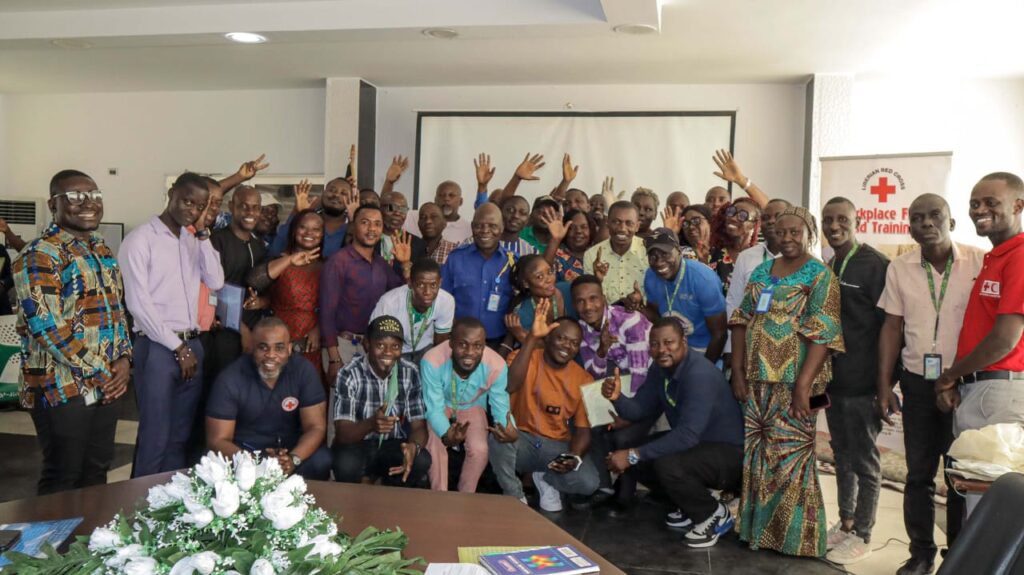
The Red Cross CEO believes that through the partnership with the Ministry of Finance and Development Planning, workplace safety will be promoted and ensured. “Ensuring workplace safety is a shared responsibility. Every injury prevented means a life protected, a family preserved, and productivity sustained. Therefore, when we prioritize safety, we protect our most valuable asset—our people. A safe workplace is the foundation for a healthy, productive, and resilient organization,” Mr. Blamoh added.
He further highlighted that First Aid is one of the Red Cross’s key income-generating activities, helping raise local funds to support its humanitarian operations across Liberia. “Commercial First Aid training remains one of our core income streams—allowing us to support local humanitarian actions while building safer and more resilient workplaces nationwide,” Mr. Blamoh added.
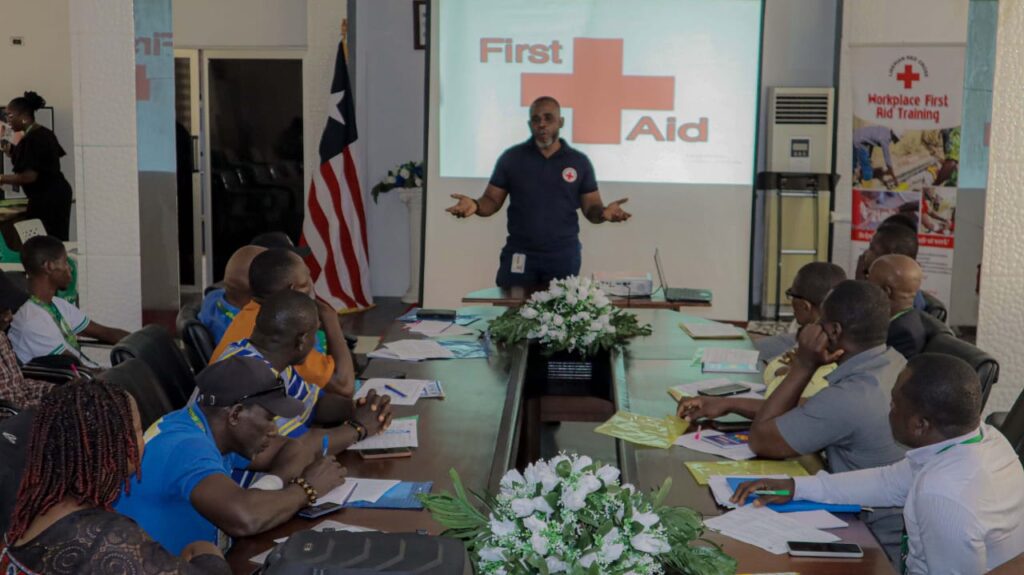
He emphasized that the partnership with the Ministry highlights the Liberia National Red Cross Society’s unwavering commitment to promoting health, safety, and continuous capacity building. “Our collaboration with the Ministry of Finance and Development Planning reaffirms the Red Cross’s dedication to fostering a safe and healthy work environment where employees can operate with confidence and efficiency,” he concluded. The Liberia National Red Cross Society offers a variety of first aid training programs—including Basic First Aid, Occupational First Aid, and Emergency Life-Saving First Aid—as well as customized first aid kits for personal, office, home, and vehicle use.